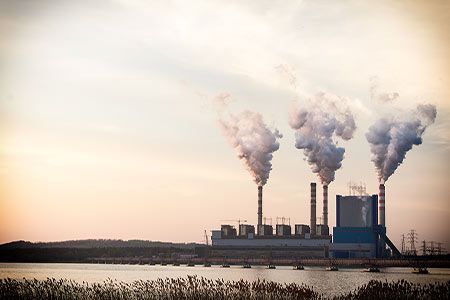
Collaborating to eliminate methane emissions in the energy sector
Worley is now a supporter of Aiming for Zero, a global initiative aimed at eliminating methane emissions in the upstream oil and gas industry.

Browse the latest upstream project news news and articles.
Worley is now a supporter of Aiming for Zero, a global initiative aimed at eliminating methane emissions in the upstream oil and gas industry.
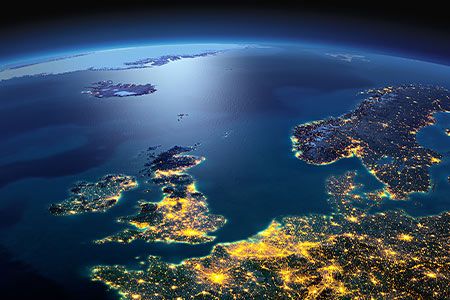
The companies have agreed on the main commercial terms to transport CO2 captured from Yara Sluiskil, an ammonia and fertiliser plant in the Netherlands, and permanently store it under the seabed off the coast of Norway.

A new feature used in the creation of GeoWells Brazil is an innovative core image interpretation workflow. This harnesses machine learning technology to predict core and thin section descriptions over hundreds of wells, and tens of thousands of images.
With its headquarters in Warrington, England, the new office in Aberdeen becomes its second facility in the UK, strengthening its presence in the UK’s vital oil and gas industry, as well as in Europe and Africa.
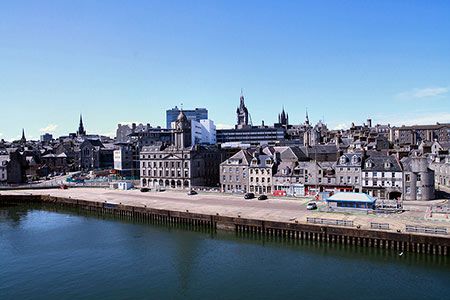
The facility allows the company to stock equipment which is available for hire and deployment straight away, helping ease concerns around supply chain delivery.

TechnipFMC will continue to provide a wide range of engineering, studies and technical services to Neptune Energy. This includes installation work and operational support for Neptune’s development projects and producing fields.

CGG will apply its unique high-end OBS & FWI imaging technologies, expertise and specialised HPC from its UK and Cairo imaging centres to deliver the highest-quality 3D seismic images of pre-Messinian targets.

Under the terms of the contract, CGG will continue to provide its proven reservoir characterisation workflows, such as geostatistical, 4D and azimuthal inversion, while also bringing new state-of-the-art technologies to Brazil to further enhance reservoir understanding.
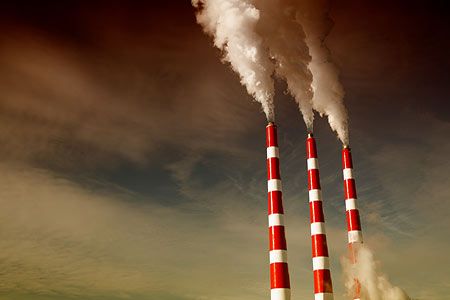
This stage of the L10 carbon capture and storage project has the potential to store 4-5 million t of CO2 annually for industrial customers within depleted gas fields around the Neptune-operated L10-A, B and E areas. It represents the first stage in the potential development of the greater L10 area as a large-volume CO2 storage reservoir.
Equinor and the UK’s Centrica have signed an agreement which will provide additional supplies of around 1 billion cubic meter (bcm) of gas for each of the coming three heating seasons.

Modus has developed the application of fully automated, low cost, carbon-zero inspection and maintenance services using subsea hybrid autonomous underwater vehicles (HAUVs) to map underwater topography and inspect pipelines, cabling and undersea structures.

The paper describes how a combination of machine learning and rock physics helped leverage legacy seismic and well data for the characterisation of a carbonate geothermal reservoir located in the Dogger Formation northeast of Paris, France.