
Rockwell Automation helps Petrobras cut time, cost, and engineering effort through advanced process control and automation solutions
Published by Emilie Grant,
Assistant Editor
Oilfield Technology,
As a world leader in deep and ultradeep oil and gas exploration and production, Petrobras operates a significant number of Floating Production, Storage, and Offloading (FPSO) vessels, accounting for some 40% of the world’s total fleet. FPSOs, first introduced in the late 1970s, proved pivotal as companies started exploring deeper, more remote oil fields, including those in the North Sea and off the coast of Brasil.
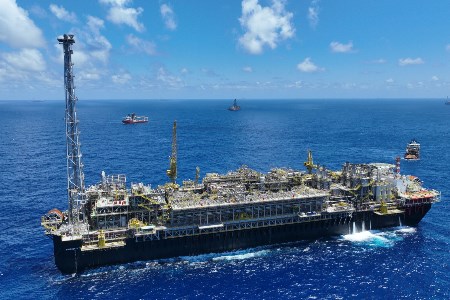
As well as making smaller and marginal fields more economically viable, they offer many advantages over fixed rigs, including their versatility in deep water, their inherent mobility, and their capability to process and store large quantities of oil when ship-to-shore pipelines are unfeasible.
However, for all their flexibility and production efficiencies, they require high capital expenditure, and many FPSO projects run over budget, with 41% experiencing launch delays, too, due to their multi-EPC, globally sourced, multi-module construction.
When on site they present demanding operational, integration and safety challenges throughout the vessel, especially in their crowded and complex top-side modules. They also require exacting maintenance regimens that are compounded by hostile marine environments and their remote locations.
With the per-barrel price of oil fluctuating anywhere between US$50 and US$100 over the past five years, downtime in vessels such as those operated by Petrobras – which can produce 200 000+ bbls of oil and compress 7.2 million m³ (254 million ft3) of gas per day – is immediately and starkly quantifiable. As is the lost revenue due to delays in getting the vessels built, launched, commissioned, and fully operational.
What is more, the operators must also consider contemporary challenges, such as sustainability, keeping flaring caused by an inability to process materials to an absolute minimum, and cybersecurity – with many oil and gas companies experiencing a surge in cyberattacks – to reinforce resilience, security and uptime.
The solution
With five new FPSO vessels (P78, P79, P80, P82 & P83) – all in various stages of build, test, commissioning and deployment – Petrobras realised that a tightly connected, better integrated and more standardised solution for the vessels’ operational, processing and safety capabilities would deliver significant advantages, especially if lessons learned could be passed from one vessel to the next.
Not only would standardisation be beneficial for in-the-field operations – for oil and gas processing and general services (power, HVAC, engine) – but also throughout the entire lifecycle of the vessels, from initial design and engineering – where its impact is critical – all the way through build, testing, commissioning, and onwards to future retrofits and enhancements.
At the same time these vessels were being planned, teams at Rockwell Automation and Sensia recognised that a tightly integrated purpose-built FPSO integrated control and safety solution (ICSS) – based around Rockwell’s process control solutions – would address many of the FPSO-lifecycle challenges oil and gas companies were facing.
Greg Trostel, Global Business Development Manager at Rockwell Automation, said: “The research we undertook – founded on the concept of ‘The Connected Vessel’ – resulted in the creation of our Vessel Automation and Digital Partner (VADP) programme, which incorporates an ICSS based on our process control and automation solutions.
“This joined-up approach not only helps oil and gas companies – and their vessel engineering, procurement, and construction (EPC) contractors – standardise on a single, highly capable and widely deployable ICSS architecture, but, if deployed early enough in the project, also helps address a number of the automation and control solution’s build, start-up and commissioning challenges. This would help ship operations get to value far quicker.”
Based on the capabilities offered by the VADP program and the historical experience and trust of its products and capabilities, Rockwell was awarded the ICSS contract for all five vessels by the EPC companies selected by Petrobras. In addition to the overall ICSS, control and automation solutions, Rockwell architectures are also deployed in a majority of the 50+ top-side modules, further boosting efficacy and speed of connection, integration and commissioning.
I/O counts on all vessels are in the tens of thousands and these feed into multiple cabinets with redundant-controller configurations, with interactions and insights delivered by operator and engineering workstations (OWS/EWS) HMIs and computers, all backed by multiple servers running ICSS, asset-management, FactoryTalk® Historian, and reporting systems.
Gabriel da Silva Albuquerque, automation & instrument design manager at Petrobras, said: “Our vendor list is chosen based on technical and hardware capabilities, and during the technical evaluation our EPCs will also analyse the capacity of each solution to integrate with other ship-board systems, process modules and-third party packages.”
His colleague, Alexandre Maia, automation and package engineer responsible for the P-78 Project, adds: “Onboard we have around 25 ‘big’ packages, including compressors, generators, injection and transfer pumps and hydraulic systems, which operate alongside the vessel’s life-support solutions, which include water makers, a huge HVAC infrastructure, and all onboard electrical systems. All these and the ICSS package must integrate as tightly as possible, while also being sympathetic to our philosophy of operations, which defines how equipment operates and behaves, to help boost familiarity, predictability and safety.”
Results
“Designed and developed for the digital age, our process control and automation solutions are a perfect fit for FPSO applications,” Trostel explains. “And, as a backbone for many of the other modules and control solutions, Petrobras and its EPC contractors can integrate the packages much more easily, while making versioning cleaner and safer, too. Its contemporary digital architecture also delivers an optimised foundation for more autonomous operations, which we know are certainly on the roadmap for many oil and gas customers, including Petrobras.
“From a cybersecurity standpoint, our ICSS solution is compliant with international standards, and the customer can also call upon our significant in-house consulting, implementation and cybersecurity knowledge and capabilities, not just for our scope of supply, but for the entire vessel, including all the third-party systems.”
Rockwell Automation’s process control and automation solutions can deliver an impressive array of benefits in FPSO applications. These include:
•Cost reduction through significantly lower capital expenditures and operational costs.
•Enhanced efficiency through a unified platform that streamlines operations, making it easier to manage and optimise processes.
•Improved interoperability, as different modules and systems communicate seamlessly with each other, reducing complexity.
•Greater consistency and reliability using a single platform that also reduces the risk of errors.
•Simplified maintenance and upgrades, as all components are designed to work together.
•A unified view of data, which improves visibility and supports better decision-making.
•Improved safety and compliance due to easier monitoring and control.
•Enhanced cybersecurity and improved risk assessments, which lowers vulnerability to cyberattacks.
Da Silva elaborates: “We know Rockwell Automation already, as it has supported us on many other projects, so we know what to expect. It is important not to have any surprises on projects of this scale. Rockwell is also a great fit for our EPC contractor, which wants to interact with more of a partnership dynamic, not just with a supplier.”
Maia adds: “Integration is the key. The ability of the process control and automation architecture to talk to so many other systems is essential and makes such a difference. There are many packages on each vessel supplied by third-party vendors, and the Rockwell architecture allows us to integrate them all very closely, not only allowing us to create more standardisation, but also giving us immense comfort knowing we have systems that all talk the same language.”
Petrobras is also deploying a simulator solution that is designed to deliver immersive test, build, commissioning and operational capabilities. The ICSS is a critical module in the overall scope of the simulator solution, and Rockwell is very well coordinated with the simulation supplier to deliver the best results to Petrobras.
Maia explains: “Our dynamic simulator helps us to connect and interact with digitalised control systems to identify potential issues before we go on site, even before factory acceptance testing (FAT). As well as identifying issues, we can also spot opportunities for improvement, and these can be carried forward to the next build. The simulation is also being widely used for training and familiarisation.”
This standardisation and integration approach supplied by Rockwell Automation has already showcased its advantages, playing its part in helping Petrobras achieve P79’s anchoring and deployment in record time.
Maia concludes: “We learned a lot of lessons on P78 and were able to more easily share and deploy these on P79. Indeed, when sailing from Singapore and Korea, we undertook significant testing and adjustments to make the vessels work not just better, but more streamlined, too. For both P78 and P79 we were able to establish power and initial control and safety systems while they were still in the shipyard. This allowed us to sail away with a crew on board. It’s amasing what you can achieve when you have already integrated 30 000+ I/O points 60 days before you plan to sail. Rockwell’s solution helped make this all possible.”
Looking to the future, the contract also includes a comprehensive five-year support agreement across all vessels, which will help Petrobras optimise yield and maximise uptime. As part of the VADP philosophy, Rockwell strives to be a strong partner to Petrobras, not just in the design, engineering, and start-up phases of the project, but partnering together through the entire operations lifecycle. With P78 in early operation, and P79 undergoing commissioning, we look forward to regular updates on these first two vessels and how the digitally delivered insights will help streamline the lifecycle of the three yet to come.
Read the article online at: https://www.oilfieldtechnology.com/digital-oilfield/20082026/rockwell-automation-helps-petrobras-cut-time-cost-and-engineering-effort-through-advanced-process-control-and-automation-solutions/
You might also like

PCEC signs strategic agreements with Petróleos de Venezuela
Pacific Coast Energy Company has announced strategic agreements with Petróleos de Venezuela, S.A. to redevelop Venezuelan Delta and Cabimas oil fields.