
Total E&P UK receives environmental certification
Published by Nicholas Woodroof,
Editor
Oilfield Technology,
The achievement comes as part of Total’s ambition to get to net-zero emissions across the Group’s worldwide operations by 2050 or sooner. Total E&P UK is aiming to reduce its CO2 emissions by 20% before 2025.
Jean-Luc Guiziou, Managing Director of Total E&P UK said: “ISO50001 represents the highest standard for energy performance and I am proud that it has been awarded to Total E&P UK. It represents excellent work by our environmental team, who have brought in this new energy management system to increase transparency and improve our environmental performance. It is an important step fully in line with our commitment to reach Net Zero emissions in Europe by 2050, for scope 1, 2 and 3.”
ISO50001 is an international standard that recognises excellence in energy performance. In reaching this standard, an organisation must show that it has a systematic approach to continually improving its energy efficiency. Total E&P UK reached ISO50001 standard by implementing a raft of energy-saving measures, including introducing an energy management system that created dashboards which allow the company to see emissions from all its locations offshore, in Aberdeen and in Shetland. This data is detailed enough to include specific pieces of equipment. To make use of this data Total E&P UK has also established an Energy Technical Committee. This brings together HSE experts, engineers, offshore contractors and procurement teams to share best practice and develop new ideas to improve energy efficiency.
Read the article online at: https://www.oilfieldtechnology.com/hse/11062020/total-ep-uk-receives-environmental-certification/
You might also like
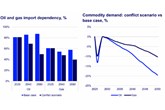
Middle East disruption could cut global oil demand 20% and gas 10% by 2050 as energy security drives shift to independence
Wood Mackenzie report that prolonged disruption to Middle East energy supplies could accelerate a structural shift in global energy systems, halving oil and gas import dependence by 2050 and reducing oil demand by 20% and gas demand by 10% relative to the base case.