
Premier Oil seeking debt extension
Published by Nicholas Woodroof,
Editor
Oilfield Technology,
The oil and gas producer’s net debt stood at US$1.97 billion at end-June, little changed from December, while its market capitalisation stands at about US$524 million.
“We continue to have pretty productive discussions with creditors. We’re close, I would say, to final termsheets on that. We agreed a timetable with them for the end of July,” CEO Tony Durrant told Reuters.
“What we’ve actually been discussing - it’s not completely finalised yet - is a rather longer extension... The range we’re talking about is more like four to five years (from 2021).”
Premier also said it expects to book a US$300-US$500 million non-cash impairment at its first-half results due on 20 August due to lower oil price expectations.
“The Group now expects to be free cash flow positive (after interest) for full year 2020 based on the current forward curve,” Premier said in a trading statement.
In May, Premier had said it expected to be cash flow neutral this year. It has hedged just over a fifth of its second-half output at around US$56/boe.
Durrant said the group’s cash flow would rise by US$30 million for each US$5 increase in benchmark oil prices, which currently stand at around US$43/bbl, above its break-even price of US$32/bbl.
He said the company sees long-term oil prices at US$60-65/bbl.
Premier expects output of between 65 000 and 70 000 boe/d this year.
It expects its output to rise by 17 000 boe/d from September after BP sweetened the sale of some of its North Sea fields to Premier last month.
Further growth is expected from the British Solan field at 10 000 boe/d later this year and another 20 000 boe/d when its Tolmount gas project comes online in 2Q21.
Read the article online at: https://www.oilfieldtechnology.com/drilling-and-production/16072020/premier-oil-seeking-debt-extension/
You might also like
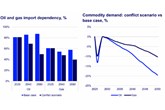
Middle East disruption could cut global oil demand 20% and gas 10% by 2050 as energy security drives shift to independence
Wood Mackenzie report that prolonged disruption to Middle East energy supplies could accelerate a structural shift in global energy systems, halving oil and gas import dependence by 2050 and reducing oil demand by 20% and gas demand by 10% relative to the base case.