
SOCAR-Petrofac JV awarded contract by BP Azerbaijan
Published by Nicholas Woodroof,
Editor
Oilfield Technology,
The five-year contract, worth around US$100 million to the JV, will support the provision of international payroll and personnel support services, including support of company personnel attending training courses inside and outside of Azerbaijan.
SOCAR vice-president for HR, IT and regulations Khalik Mammadov said:
“The service sector has contributed significantly to SOCAR’s income in recent years, with our joint venture with Petrofac becoming a major part. We are pleased to lift our partnership with BP to a new level and look forward to many decades of fruitful cooperation. Upskilling and reskilling of personnel is crucial for major companies in the age of Industry 4.0. That becomes even more important in view of the challenges brought by the current pandemic and recent associated market conditions. I strongly believe that the demand for professional training services among the leading oil and gas companies will continue to grow.”
Patty Eid, Global Head of Petrofac’s Training Services business, commented:
“BP are an important longstanding customer and we look forward to supporting them with international payroll and personnel support services including training services inside and outside of Azerbaijan. Petrofac’s Training Services business has been providing skills development opportunities across the country’s oil, gas and petrochemical industries since 2004, so this award further underpins our continued expansion in the region with key partner SOCAR.”
Read the article online at: https://www.oilfieldtechnology.com/drilling-and-production/11082020/socar-petrofac-jv-awarded-contract-by-bp-azerbaijan/
You might also like
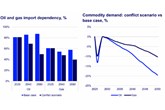
Middle East disruption could cut global oil demand 20% and gas 10% by 2050 as energy security drives shift to independence
Wood Mackenzie report that prolonged disruption to Middle East energy supplies could accelerate a structural shift in global energy systems, halving oil and gas import dependence by 2050 and reducing oil demand by 20% and gas demand by 10% relative to the base case.