
Statoil: no business centre in Europe
Published by David Bizley,
Senior Editor
Oilfield Technology,
Statoil has decided not to proceed with the evaluations of a potential business centre in Europe. The decision was presented at a meeting with employee representatives on Friday 11 March.
At the meeting it was agreed that further efficiency improvements and cost reductions were needed, and that the employee representatives and management must continue their efforts to identify other actions to achieve this.
“Our industry is currently facing a very demanding situation. Substantial, lasting cost reductions are therefore needed. There is a joint understanding of this by the company and the employee representatives. We have agreed to intensify our efforts to identify other measures that will enable us to achieve additional rationalisation and cost reductions,” says Statoil’s Chief Financial Officer (CFO), Hans Jakob Hegge.
In November 2015 the company started investigating the basis for a business centre outside Norway to cut costs. The evaluations were part of the efforts to increase Statoil’s competitiveness in an environment of sustained low commodity prices that call for lasting cost reductions. Selected services within business support and procurement were in scope for this centre. The considered number of employees was around 180, approximately half of them internal positions.
“The evaluations have been thorough, and after an overall evaluation we choose not to progress this work. We must therefore identify other measures to reduce the level of costs. Management and employee representatives share a common goal of strengthening the company’s competitiveness and profitability,” says Hegge.
Adapted from a press release by David Bizley
Read the article online at: https://www.oilfieldtechnology.com/drilling-and-production/11032016/statoil-no-business-centre-in-europe/
You might also like
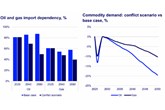
Middle East disruption could cut global oil demand 20% and gas 10% by 2050 as energy security drives shift to independence
Wood Mackenzie report that prolonged disruption to Middle East energy supplies could accelerate a structural shift in global energy systems, halving oil and gas import dependence by 2050 and reducing oil demand by 20% and gas demand by 10% relative to the base case.