
WesternZagros provides operational update
Published by Angharad Lock,
Digital Assistant Editor
Oilfield Technology,
WesternZagros Resources Ltd has announced that the transition of operatorship of the Garmian Block in the Kurdistan Region of Iraq (KRI) from WesternZagros to Gazprom Neft Middle East B.V. was completed effective 29 February 2016. The agreement does not involve any change of working interest in the production license. This transition was made pursuant to the terms of the Garmian Production Sharing Contract which mandates that Gazprom Neft assume operatorship during the Development Period of the Contract.
"We now look forward to Gazprom Neft bringing its extensive technical and operational expertise in crude oil production, refining, and marketing as the joint venture continues the development of the Sarqala Oilfield," said Simon Hatfield, CEO of WesternZagros.
Recently, the Ministry of Natural Resources (MNR) of the Kurdistan Regional Government announced a new payment mechanism for crude oil sales in the KRI which stipulated that monthly payments to producing international oil companies will be based on the rights set out under the production sharing contracts for each contract area. Crude oil pricing terms are now linked to average monthly Brent crude prices.
On the Kurdamir Block, the company is actively working with the Operator Talisman (Block K44) B.V in progressing the details of the Field Development Plan and the associated agreements required as part of the gas and oil development for the Kurdamir field.
Edited from press release by Angharad Lock
Read the article online at: https://www.oilfieldtechnology.com/drilling-and-production/11032016/westernzagros-provides-operational-update-2748/
You might also like
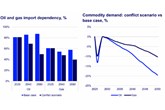
Middle East disruption could cut global oil demand 20% and gas 10% by 2050 as energy security drives shift to independence
Wood Mackenzie report that prolonged disruption to Middle East energy supplies could accelerate a structural shift in global energy systems, halving oil and gas import dependence by 2050 and reducing oil demand by 20% and gas demand by 10% relative to the base case.
